
TREATMENTS / THE KNEE
Knee treatment and surgery
ACL reconstruction is the flagship of this practice: arthroscopic, precise and rehab-led. Around it sits the full range of knee care, from meniscus repair to replacement for the right candidate, at the clinic in Koregaon Park, Pune.
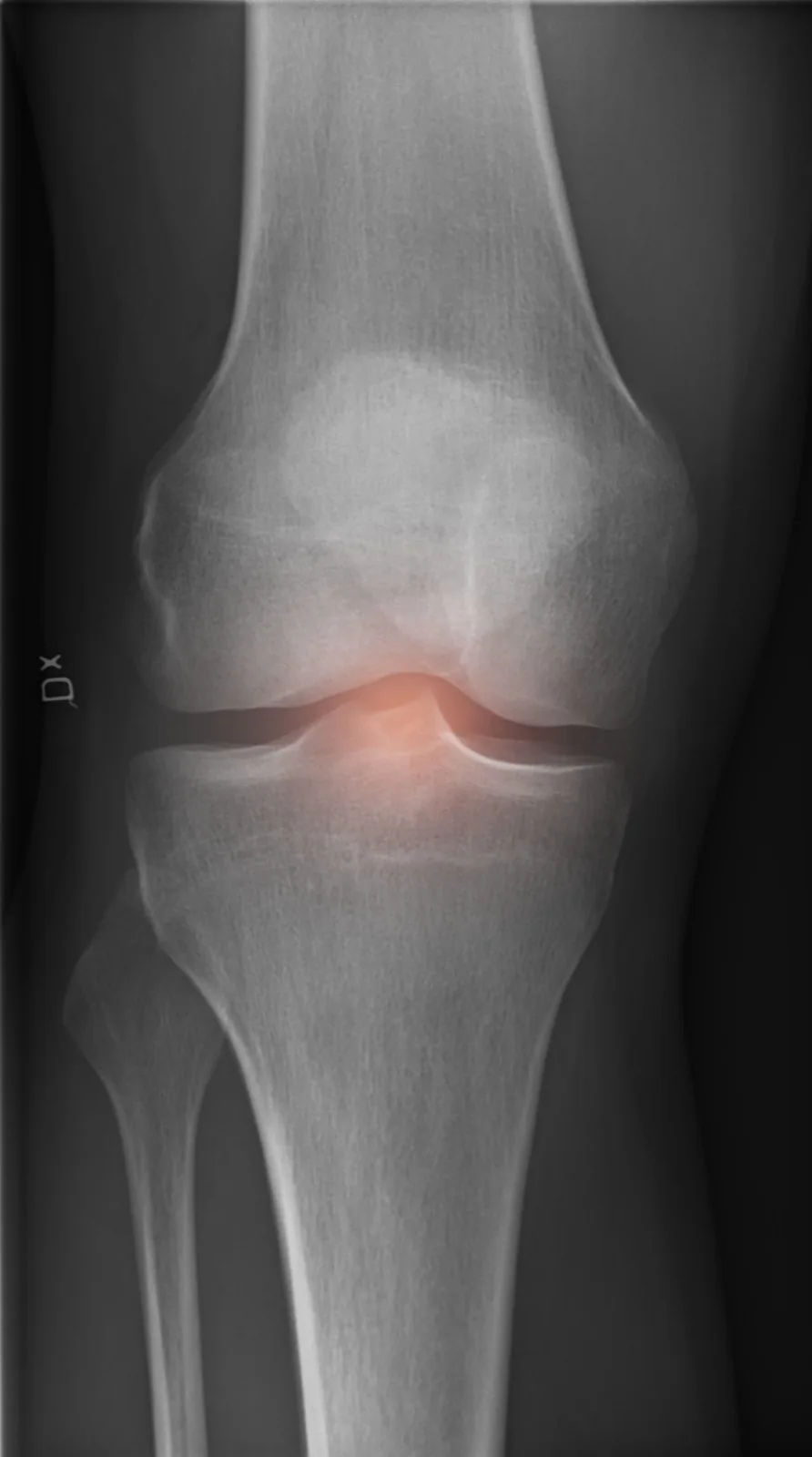 Knee · Joint line, where pain localises
HOW THE KNEE WORKS
How the knee holds together
The knee is a hinge where the thigh bone (femur) meets the shin bone (tibia). It has to bend, straighten and stay stable through every step, and most knee problems trace back to one of the parts that keep it stable or cushioned.
- The cruciate ligaments, the ACL and PCL, cross inside the joint and stop the shin sliding forward or back.
- The collateral ligaments guard the inner and outer sides of the knee against a sideways force.
- Two menisci, crescents of cartilage, cushion the joint and spread load between the bones.
- A smooth layer of cartilage lines the surfaces so the bones glide rather than grind.
- Pain most often localises to the joint line, where the bones meet, which is where an examination begins.
FLAGSHIP / ACL RECONSTRUCTION
ACL reconstruction
The anterior cruciate ligament is the knee’s main pivot stabiliser. When it ruptures, the knee can feel fine in a straight line yet give way on a turn, which is why ACL tears end sporting seasons and, left unstable, can slowly damage the meniscus and cartilage behind them.
Dr Jadhav reconstructs the ACL arthroscopically: a new graft is threaded into the joint through small portals, positioned under camera guidance and fixed in bone tunnels. No open joint, smaller scars, and rehabilitation that can begin early.
ACL reconstruction appears in his Google reviews again and again, often alongside meniscus repair carried out in the same sitting. It is the operation this practice is built around, and the one where his three habits, explaining fully, operating only when needed, and following rehab through to the end, matter most.
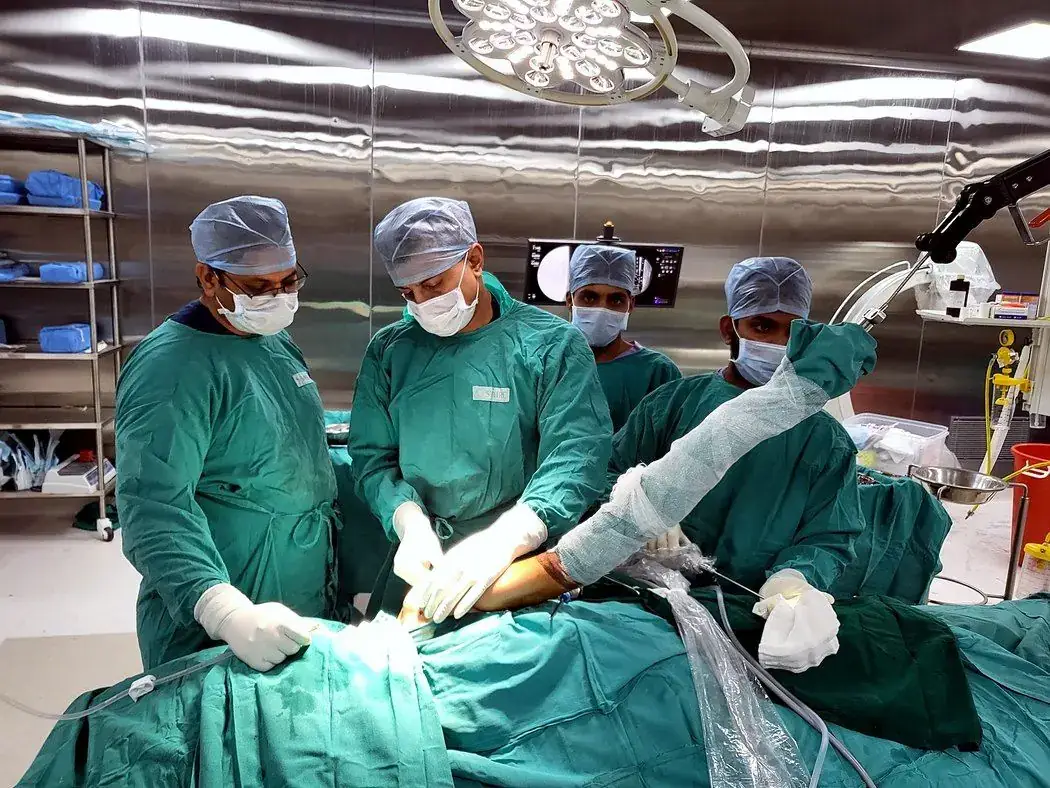 Arthroscopy in progress · Operating theatre
Choosing your graft
A reconstructed ACL is built from your own tissue. Which tissue is a real decision, made with you in consultation, based on your sport, your anatomy and any previous surgery. Simply put:
| Graft | What it is | Where it fits |
|---|---|---|
| Hamstring tendon | Tendons from the inner thigh, folded into a strong multi-strand graft. | A common choice with a small incision, suited to many recreational athletes. |
| Patellar tendon | The central strip of the kneecap tendon, taken with a small block of bone at each end. | Bone-to-bone healing in the tunnels; often discussed for pivoting sports. |
| Quadriceps tendon | A strip of the thick tendon just above the kneecap. | A robust option, considered case by case, including in revision surgery. |
REHAB PHILOSOPHY
Recovery and rehabilitation
Recovery from ACL reconstruction is staged. The stages are planned before the operation, then reviewed at follow-up after follow-up until the knee is back at work. Patients mention this follow-through in their reviews more than the surgery itself.
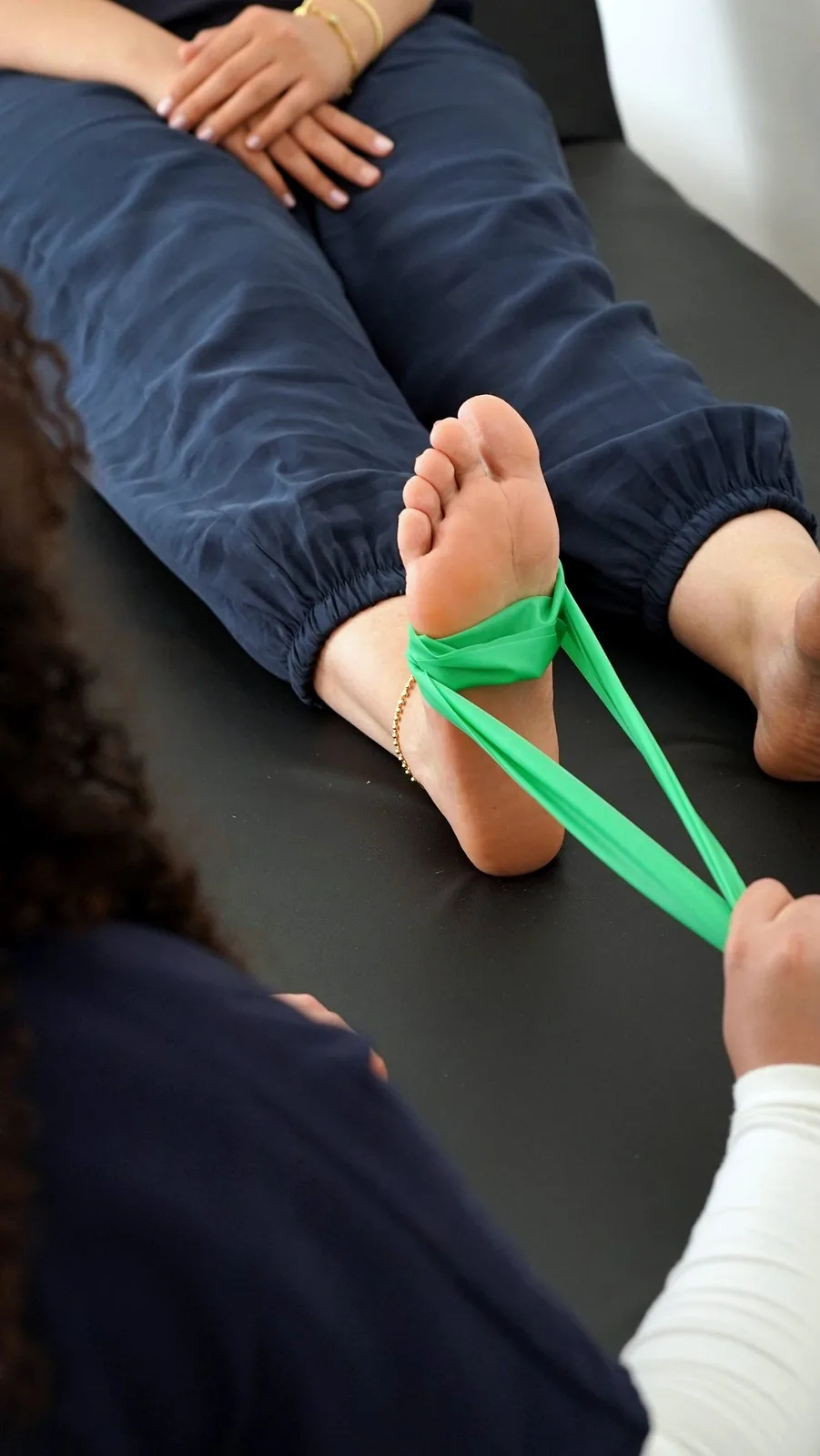 Rehabilitation · Guided recovery
Protect and settle
Swelling control, wound care and safe walking. The graft is protected while the knee calms down and regains a fully straight leg.
Range and activation
Full extension first, then bend. The quadriceps is woken up early, because a strong thigh is the best protection a new graft can have.
Strength and control
Progressive loading in the gym and the physiotherapy room: strength, balance and confidence on one leg before anything faster is attempted.
Return to play
Sport-specific drills, then a graded return. The calendar does not decide this stage; the knee does, at review.
Every knee moves at its own pace. Your plan is written for your knee, your sport and your life, and adjusted at each follow-up rather than copied from a chart.
FROM THE LIGHT BOX
Post-operative films from the practice
Two post-operative X-ray films from the practice, from two different patients. Slide the handle to compare them. Every operated joint is checked with imaging like this at follow-up.
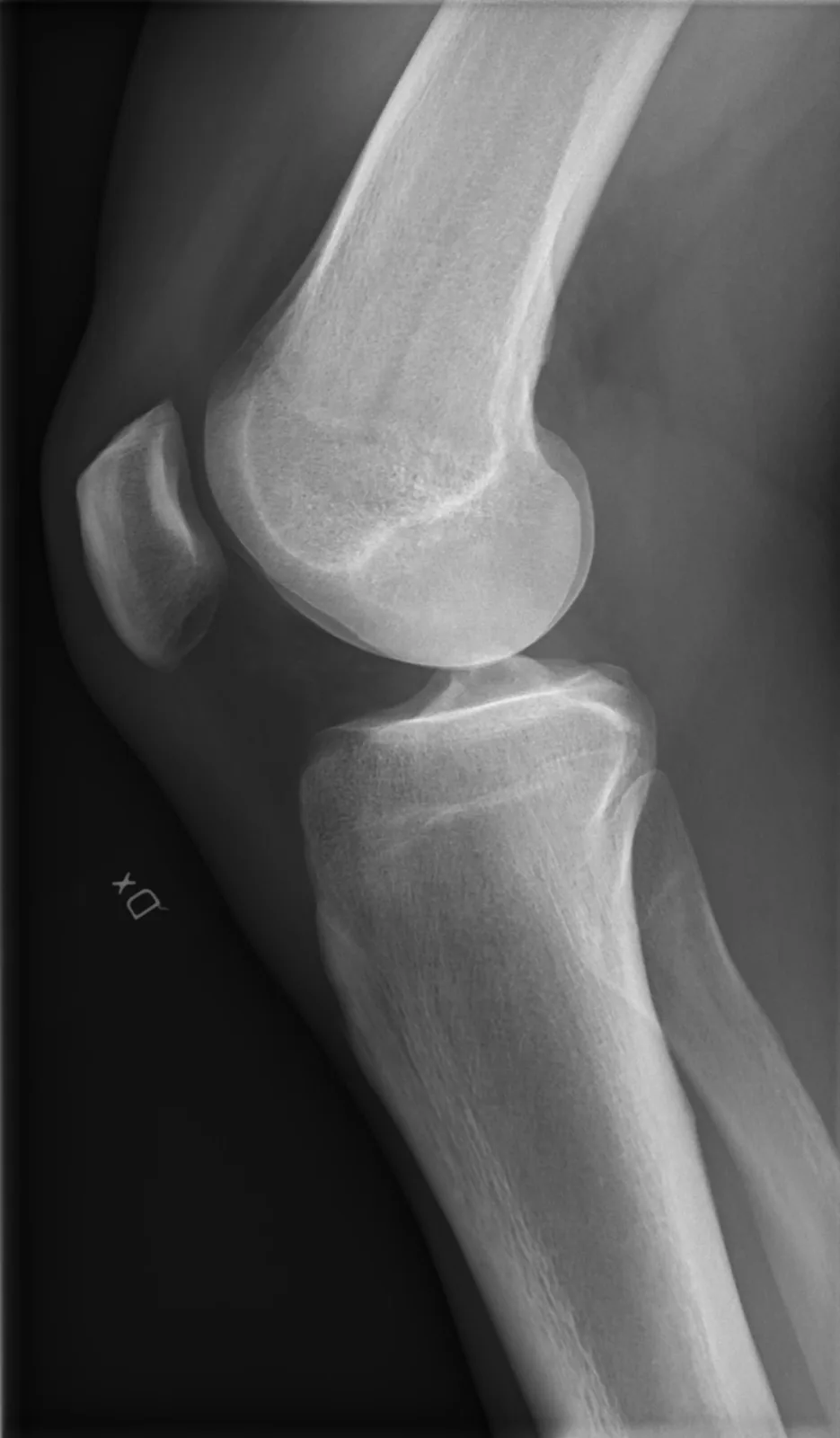
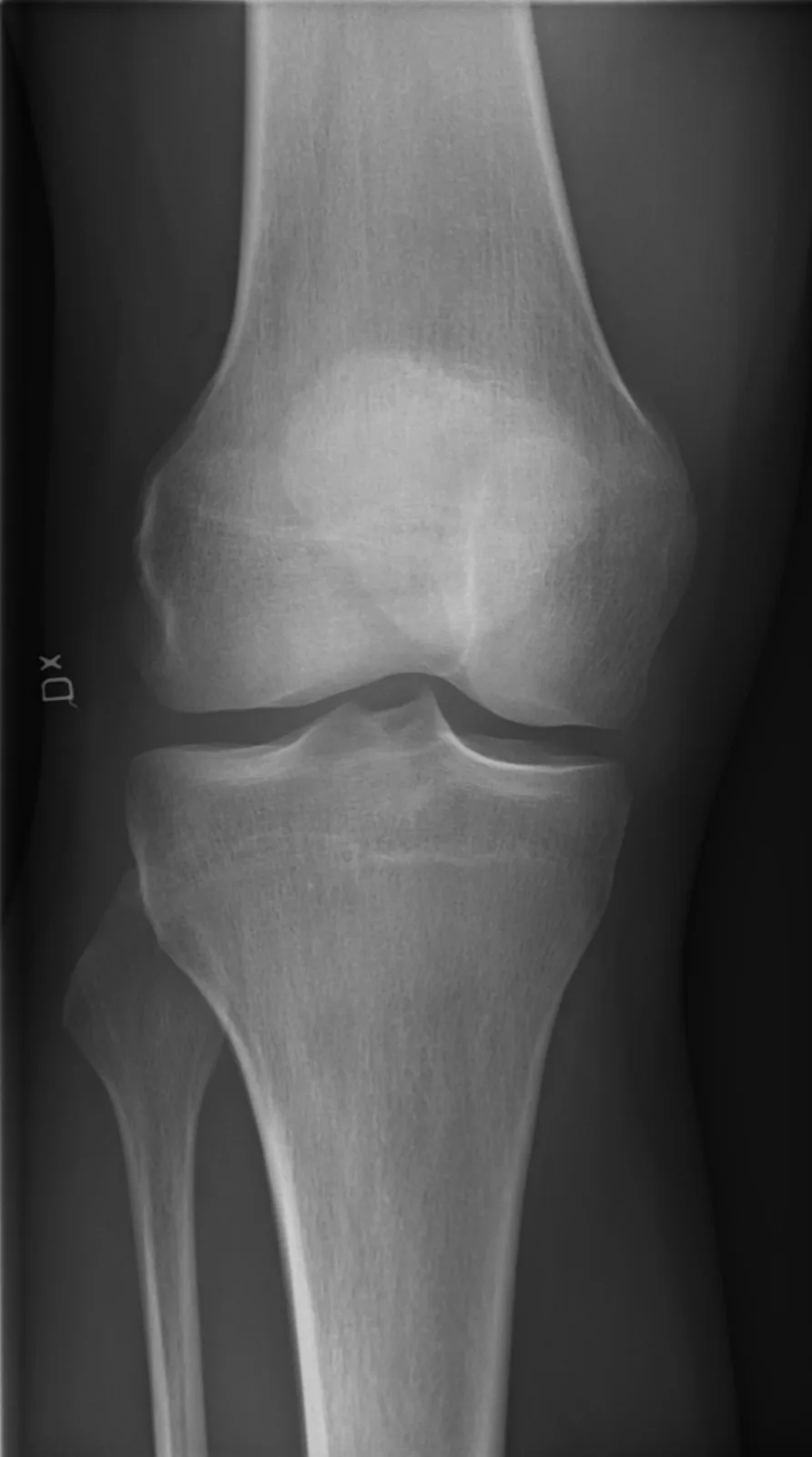
Drag the handle, or use arrow keys · two separate patients, shown for imaging standard only
THE FULL KNEE LIST
Other knee conditions
Six other reasons people come in with knee problems. Open each one for a short summary of what it is and how it is usually treated. All of it starts with an examination.
The posterior cruciate ligament sits behind the ACL and stops the shin sliding backwards. It is classically injured when a bent knee hits a dashboard, or in sport through a fall onto the front of the knee.
Many isolated PCL tears do well without surgery, with bracing and a quadriceps-led physiotherapy programme. Reconstruction is discussed when instability persists or when other ligaments are torn along with it. The first step is a proper examination and an unhurried review of the scans.
The menisci are two crescents of shock-absorbing cartilage between thigh bone and shin bone. A torn one can cause joint-line pain, clicking, swelling after activity, or a knee that locks and will not fully straighten.
Where the tear pattern and blood supply allow, Dr Jadhav repairs the meniscus arthroscopically rather than removing it, because preserved meniscus protects the joint for decades. Degenerative tears in older knees often settle with physiotherapy alone, and are treated that way first.
Beyond the cruciates, the MCL and LCL guard the sides of the knee, and a severe twist or collision can injure several ligaments at once.
Most isolated MCL injuries heal with bracing and guided rehabilitation. Combined or higher-grade injuries need a surgical plan that addresses every unstable structure in the right order. The examination decides the plan, not the swelling.
Softening of the cartilage behind the kneecap, and a frequent cause of anterior knee pain in young, active people. Stairs, squats and long sitting are the usual complaints.
Treatment is almost always non-surgical: quadriceps and hip strengthening, activity modification and patience. Surgery is reserved for the few cases with a clear structural cause. Expect a rehab plan here, not an operation.
When arthritis has worn the joint surfaces and conservative care, medication, physiotherapy and injections no longer give a life worth moving in, replacement is discussed.
A partial replacement resurfaces one worn compartment and keeps the rest of the native knee. A total replacement resurfaces the whole joint. Dr Jadhav positions replacement as an option for the right candidate at the right time, after conservative options have had a fair trial, never as a first offer.
Knee pain is a symptom, not a diagnosis. Behind it may be any of the conditions above, or something as treatable as a load and strength problem.
A consultation starts with history and a hands-on examination, adds imaging only when it will change the decision, and ends with a named diagnosis and a first-line plan. Often that plan involves no surgery at all.
Educational summaries only. What your knee actually needs can only be decided in consultation, with an examination and your scans on the desk.
PATIENT STORIES / KNEE