
SHOULDER
Shoulder pain, injury and surgery
Rotator cuff tears, frozen shoulder, recurrent dislocation and shoulder pain, treated at the clinic in Koregaon Park. Conservative options come first, with keyhole surgery when it is genuinely needed.
HOW THE SHOULDER WORKS
A ball on a shallow socket, held together by soft tissue
The glenohumeral joint pairs the ball of the humerus with a socket, the glenoid, that is closer to a saucer than a cup. That shallow fit is what lets the arm swing through a wider range than any other joint in the body.
The price of that range is stability. The joint depends on a rim of cartilage called the labrum, a capsule of ligaments, and the four rotator cuff tendons to keep the ball centred. When any of these is injured, overworked or inflamed, the result is the pain, stiffness or slipping that brings most shoulder patients to the clinic.
- Rotator cuff. Four tendons that lift and rotate the arm and hold the ball centred.
- Labrum. A cartilage rim that deepens the socket and resists the ball slipping out.
- Capsule. The sleeve of ligaments that can tighten and stiffen the joint.
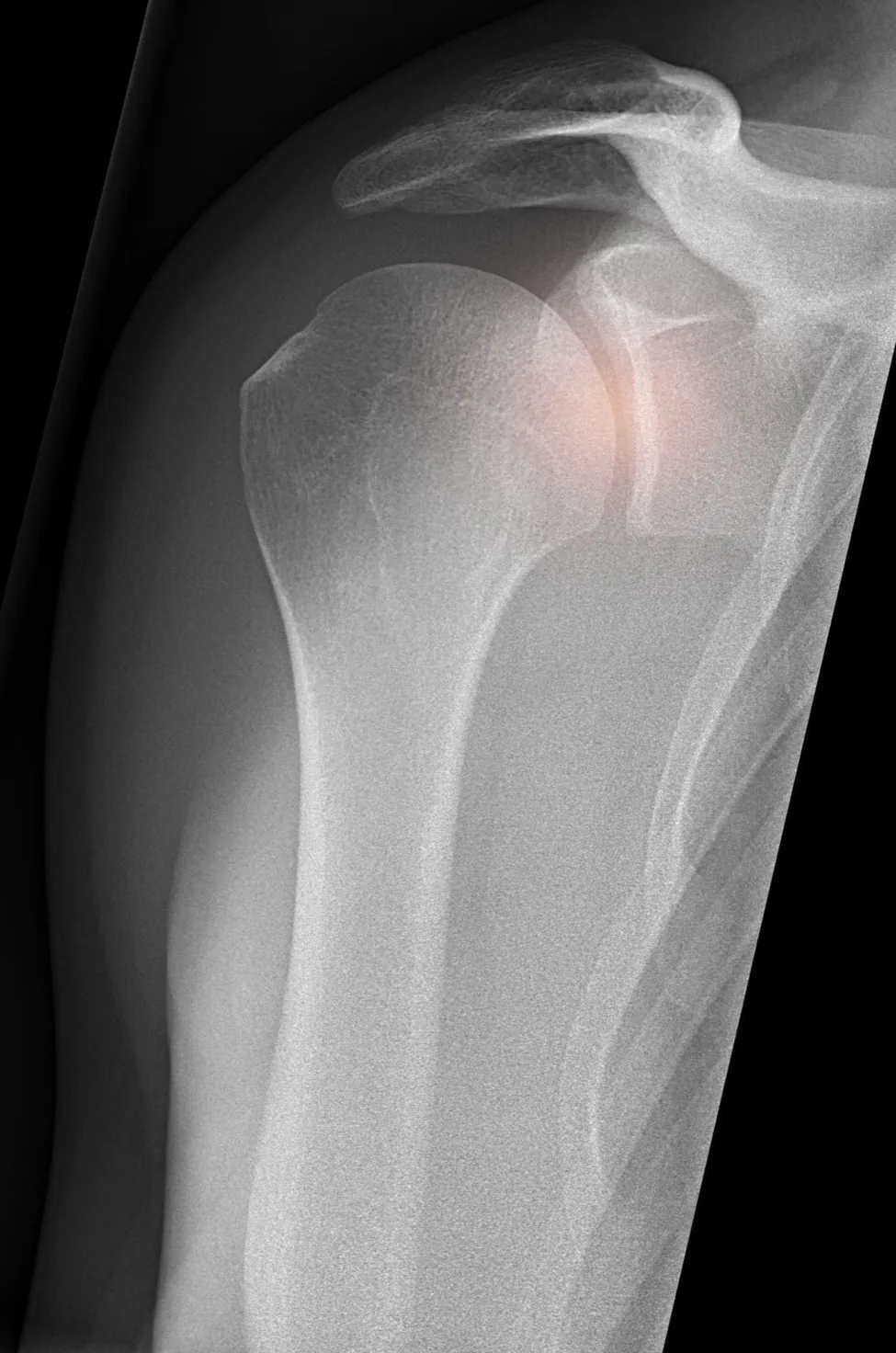 Shoulder · Glenohumeral joint, where pain localises
COMMON CONDITIONS
Common shoulder conditions
For each one: what it feels like, how it is diagnosed, and how it is treated, starting with conservative care. Every case is different, so a consultation decides what applies to you.

Rotator cuff injury & repair
Pain and weakness lifting the arm, often after strain, a fall, or simple wear with age.
Read the detail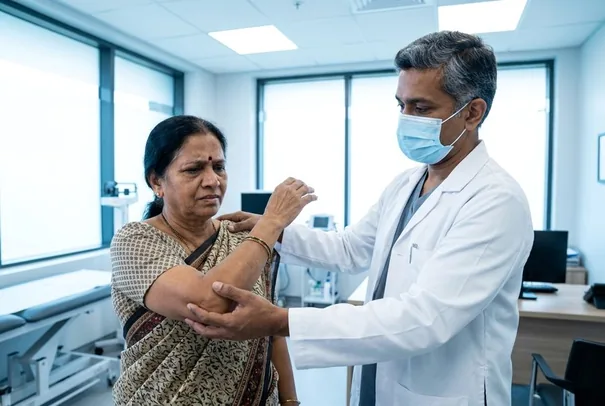
Frozen shoulder
A shoulder that grows stiff and painful over months, usually without any clear injury.
Read the detail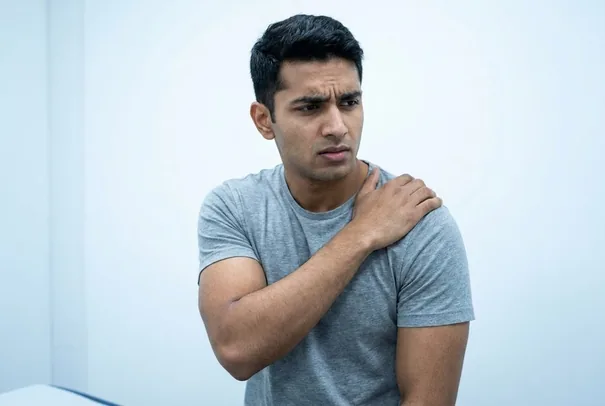
Dislocation & instability
A shoulder that slips, catches, or has come out of joint more than once.
Read the detail
Shoulder arthroscopy
Keyhole surgery of the shoulder, offered when it is genuinely indicated.
Read the detail
Persistent shoulder pain
When the cause is not yet clear, careful diagnosis comes before any treatment.
Read the detailWHAT IT FEELS LIKE
Pain over the outer side of the shoulder and upper arm, often worse when lifting the arm overhead, reaching behind the back, or lying on that side at night. Larger tears can add visible weakness: lifting a kettle or a bag suddenly feels unreliable. Some tears follow one clear injury; many develop gradually with age and use.
HOW IT IS DIAGNOSED
A focused clinical examination of movement and strength usually points to the cuff. An X-ray helps rule out other causes, and an ultrasound or MRI confirms whether the tendon is inflamed, partially torn or fully torn, and how far it has retracted. That distinction drives every treatment decision.
THE TREATMENT LADDER
- Conservative care first. Activity modification, a structured physiotherapy programme to strengthen the cuff and shoulder blade muscles, and simple pain control settle many partial tears and tendon irritations.
- Targeted injection when appropriate. A steroid injection can calm a painful, inflamed tendon so physiotherapy can progress. Used selectively, not by default.
- Arthroscopic rotator cuff repair. For full-thickness tears, and for tears that stay painful or weak despite good conservative care, the tendon is reattached to the bone through keyhole portals using suture anchors.
TYPICAL RECOVERY
After a repair the arm is protected in a sling for the first few weeks while the tendon heals to bone. Physiotherapy then progresses in stages, from gentle assisted movement to active use to strengthening, typically over several months. Tear size, tissue quality and your goals all change the timeline, so the plan is set individually and reviewed at each follow-up.
WHAT IT FEELS LIKE
A shoulder that grows stiff and painful over weeks to months, usually without a clear injury. Reaching overhead, behind the back or out to the side becomes restricted, sleep is disturbed, and small sudden movements can catch sharply. It is more common between 40 and 60, and in people with diabetes or thyroid conditions.
HOW IT IS DIAGNOSED
Frozen shoulder is largely a clinical diagnosis: both active and passive movement are restricted, with outward rotation usually affected most. An X-ray is used to exclude arthritis and other causes, and scans are added only when the picture is not typical.
THE TREATMENT LADDER
- Explanation and a home programme. Understanding the phases of the condition matters. A guided stretching programme, supported by supervised physiotherapy, is the foundation of treatment.
- Pain control and injection. Anti-inflammatory medication used judiciously, and a corticosteroid injection into the joint, can shorten the painful phase and make physiotherapy tolerable.
- Procedures for resistant cases. When stiffness persists despite months of proper conservative care, options such as hydrodilatation or arthroscopic capsular release are discussed case by case.
TYPICAL RECOVERY
Frozen shoulder recovers in months, not weeks, moving through painful, stiff and thawing phases. Movement typically returns gradually with consistent physiotherapy, and follow-up continues through the course so the plan can change as the shoulder does.
WHAT IT FEELS LIKE
A sense that the shoulder slips, catches or cannot be trusted, especially with the arm raised and turned outward, the throwing position. Some patients have had one or more full dislocations that needed to be put back; others feel repeated partial slips. It is most common in younger, active people after a first dislocation.
HOW IT IS DIAGNOSED
History carries most of the diagnosis: how the first episode happened and how often it recurs. Examination includes specific apprehension tests. An X-ray looks at the bone, and an MRI, sometimes with dye in the joint, shows labral injuries such as a Bankart tear. A CT scan is added if bone loss from repeated dislocations is suspected.
THE TREATMENT LADDER
- After a first dislocation. Reduction, a short period of protection, then physiotherapy to retrain the muscles that stabilise the joint. Many first-time dislocations are managed this way.
- Honest assessment of risk. Age, sport, bone loss and the number of episodes shape the risk of it happening again, and that risk is discussed openly before any decision.
- Arthroscopic stabilisation. For recurrent dislocation, keyhole repair of the torn labrum and capsule (a Bankart repair) restores the socket rim. Significant bone loss may need a different procedure, explained case by case.
TYPICAL RECOVERY
A sling protects the repair early, then physiotherapy rebuilds motion, strength and confidence in stages. Return to contact or overhead sport is a joint decision made on recovery milestones rather than the calendar, usually over several months.
WHAT IT IS
Keyhole surgery of the shoulder: a small camera and fine instruments passed through incisions a few millimetres long. It is the technique behind rotator cuff repair, stabilisation surgery, capsular release, and the treatment of labral and biceps tendon problems.
WHEN IT IS CONSIDERED
Arthroscopy is a tool, not a goal. It is offered when the diagnosis is clear, when structural damage will not settle on its own, or when a fair trial of conservative treatment has not restored function. If an operation is unlikely to help, that is said plainly at the consultation.
WHAT THE PROCEDURE INVOLVES
- Planning. The procedure, the anaesthesia and the rehabilitation plan are explained and agreed before the operation, not after it.
- The operation. Usually day care or a short stay. The joint is inspected through the camera and damaged tissue is repaired with fine sutures and small anchors through the portals.
- Afterwards. Small dressings, early review of the wounds, and a written physiotherapy pathway that starts on schedule.
TYPICAL RECOVERY
Small incisions do not mean instant recovery: repaired tissue still needs its full biological healing time. What keyhole surgery changes is the surgical trauma around it, which generally means less early discomfort and an easier start to rehabilitation. A stage-wise physiotherapy plan is set before surgery and followed through review visits until the shoulder is back at work.
WHAT IT FEELS LIKE
Not every painful shoulder is a tear. Impingement, acromioclavicular joint wear, biceps tendon irritation, early frozen shoulder, and even pain referred from the neck can all present as an aching, catching or burning shoulder. The pattern, the timing and what provokes it are the first clues.
HOW IT IS DIAGNOSED
A careful history and a hands-on examination localise the source before any scan is ordered. Imaging is chosen to answer a specific question, an X-ray for joints and bone, ultrasound or MRI for tendons and soft tissue, rather than as a routine battery of tests.
THE TREATMENT LADDER
- Address the cause conservatively. Posture and activity adjustments, a targeted physiotherapy programme, and short, sensible courses of medication resolve a large share of shoulder pain.
- Targeted injections where indicated. When a specific structure is confirmed as the source, an injection can be both a treatment and a confirmation of the diagnosis.
- Definitive treatment of the underlying condition. If a structural diagnosis emerges, a cuff tear, instability, or resistant frozen shoulder, treatment follows the ladder for that condition, with surgery reserved for clear indications.
TYPICAL RECOVERY
Most non-surgical shoulder pain improves over weeks once the right programme is in place, with review visits to confirm the progress is real.
See a doctor sooner if you have night pain that wakes you, weakness in the arm, pain after an injury or fall, fever alongside shoulder pain, or symptoms that persist beyond a few weeks.
This page is general medical information, not a diagnosis or a treatment plan. Shoulder conditions overlap, and every case differs. A consultation and examination decide what applies to you. Call 098904 76298 to book.
METHOD
How treatment is decided
-
STEP / 01
Listen and examine
The consultation starts with your history and a hands-on examination. Most shoulder diagnoses are made here, before any scan is ordered.
-
STEP / 02
Image what needs imaging
X-ray, ultrasound or MRI when the result will change the decision, read alongside the clinical findings rather than instead of them.
-
STEP / 03
Conservative care first
Physiotherapy, activity changes, posture work and targeted injections resolve a large share of shoulder problems without an operation.
-
STEP / 04
Arthroscopy when indicated
When structural damage needs repair, keyhole surgery is planned openly, and rehabilitation is followed through to discharge, not left to chance.
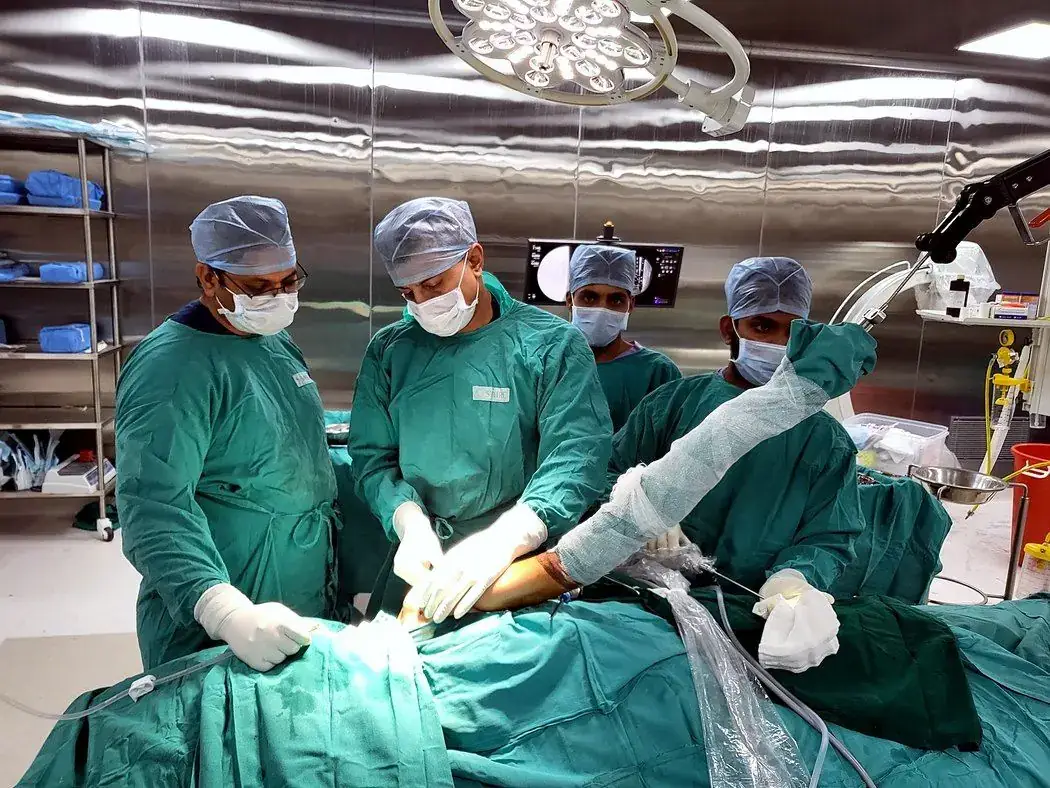 In theatre · Arthroscopic surgery
PATIENT WORDS / SHOULDER
What shoulder patients say
From the 92 Google reviews of the clinic, here is what patients who came with shoulder problems wrote afterwards.
★★★★★“Operated on my shoulder for rotator cuff tear. Totally satisfied with treatment.”
★★★★★“He performed my left shoulder surgery and was extremely helpful, approachable, and always available to answer my questions. His post-surgery follow-up was outstanding.”
★★★★★“She consulted Dr Rounat Jadhav, who identified the actual issue and provided the right treatment. We finally saw real improvement.”
Book a shoulder consultation
Consultations Monday to Saturday, 5 pm to 8 pm, at Koregaon Park.